
Introduction
Daily activities subject cabinet doors to heavy use because they serve as entrances to stored items. These doors perform hundreds of cycles while carrying their contents and tolerating unintended collisions. These functional components, which serve our kitchens and bathrooms and other spaces, gradually develop minor alignment issues with time. A space develops unexpectedly or a door develops friction with its adjacent door, which produces an annoying noise. Every homeowner should learn to adjust cabinet doors because this skill enables you to fix cabinet problems using basic tools. The following complete guide will show you step by step how to restore your cabinets to their proper alignment.
Why Cabinet Doors Need Adjustment
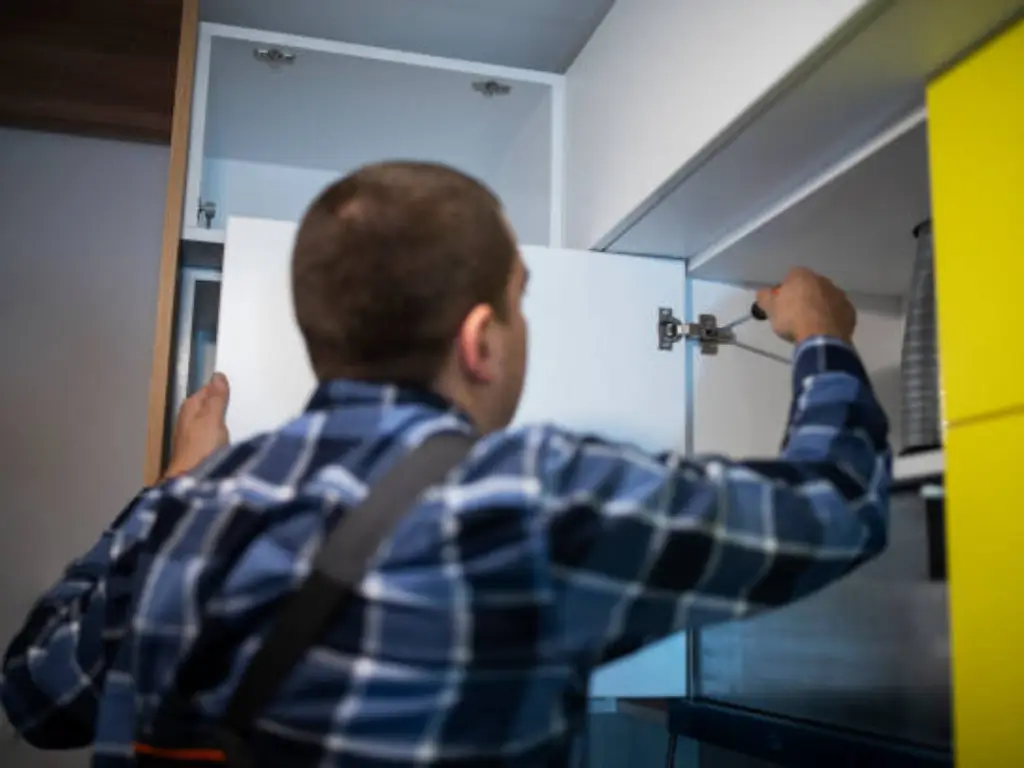
Cabinet doors experience the effects of gravity alongside wear and tear and the natural house settlement process because they are objects that move under weight. The hinges that operate doors experience both loosening and shifting as time progresses. The weight of the door particularly affects solid wood and frequently used doors because it leads to sagging. Temperature changes along with humidity variations result in minor dimensional changes that affect both the door wood and the cabinet frame wood. Small changes in the door and cabinet frame alignment create multiple problems, including improper door closure and visible gaps and noisy operation, and possible damage to both components. A swift repair of these problems enhances both your space appearance and maintains optimal functionality of your cabinetry. A short maintenance procedure applied to cabinets will keep them operational for many more years to come.
Identifying Your Cabinet Hinge Type: A Key First Step
Your first step should be to understand the connection between your cabinet door and frame through the hinge before using any tools. The correct identification of hinge types remains essential because it determines how you should adjust the door. Different hinge types exist with unique adjustment systems.
Common Types of Cabinet Hinges Explained
- The hinge mechanism of Face Frame Hinges connects directly to the cabinet frame. The door rests directly against the frame during a closed position. You can observe the hinge when opening the door. The three common hinge types within this category are butt hinges, strap hinges and wrap-around hinges. The adjustment process for these hinges requires you to modify the screws found on the hinge body.
- Frameless (Euro) Hinges dominate modern cabinetry because they install inside the cabinet box instead of attaching to a face frame. The hinges become hidden from view when the door reaches its closed position. Euro hinges offer multi-directional adjustment capabilities, which makes them a preferred choice for accurate alignment. Check for adjustment screws that exist on the hinge arm and mounting plate.
- The door positioning against the cabinet frame is classified as overlay or inset. The door design of overlay hinges allows the cabinet opening to be either fully or partially covered by the door. Inset hinges allow doors to fit completely inside the cabinet opening so they match the frame perfectly. Understanding the hinge type allows you to determine whether your doors will be overlay or inset since the two styles are often linked to the hinge selection.
Examine your hinges carefully. Do the hinges remain visible when you close the door? Do the hinges connect to the frame or do they mount directly to the inside of the cabinet box? Your ability to locate adjustment screws will improve after determining the type of hinge.
Right Tools for Successful Cabinet Door Adjustment
Fortunately, adjusting cabinet doors doesn’t require an extensive toolkit. In most cases, you’ll only need a few basic items. Having these on hand before you start will make the process smoother and more efficient.
| Tool | Purpose | Notes |
| Phillips Head Screwdriver | The most common tool needed for adjusting cabinet door hinges. Ensure the screwdriver tip fits the screw heads to avoid stripping. A #2 size is often the most versatile. | Essential tool |
| Level | Used to ensure your doors are hanging straight, especially when making vertical adjustments. A small level or even a smartphone app can work in a pinch. | Recommended |
| Measuring Tape | While not always strictly necessary, it helps ensure consistent gaps between doors and the cabinet frame. | Helpful but optional |
| Pencil | Used to mark the current position of the door or hinge before making adjustments, serving as a useful reference point. | Recommended |
| Drill with Screwdriver Bits | For more stubborn screws or if you have many doors to adjust, a drill with screwdriver bits can speed up the process. Be cautious not to overtighten. | Optional, use with care |
| Small Blocks or Shims | Helps support the door while adjusting the hinges, especially for larger or heavier doors. | Optional, improves stability |
With your tools gathered, you’re ready to tackle the adjustments.
Step-by-Step Guide
Now, for the main event – the actual adjustment process. Adjustable hinges allow movement in three fundamental directions, which include vertical elevation and descent and horizontal side motion and depth extension. We will address each movement direction separately.
Adjusting Vertical Alignment (Up and Down)
If your cabinet door is hanging too high or too low compared to its neighbor or the cabinet frame, you’ll need to make a vertical adjustment.
| Step | Description |
| 1. Locate the Vertical Adjustment Screws | These screws mount the hinge to the cabinet frame or box. They often pass through elongated or oval-shaped holes to allow vertical movement when loosened. |
| 2. Slightly Loosen the Screws | Use a Phillips head screwdriver to loosen the mounting screws slightly. Don’t remove them completely – just enough to allow vertical movement. |
| 3. Adjust the Door’s Height | Gently lift or lower the door to the desired position. Use a level to ensure the top of the door is even with adjacent doors or the cabinet frame. |
| 4. Retighten the Screws | Once the door is in the correct position, carefully retighten the mounting screws. Ensure they are snug but not overtightened to avoid stripping the screw holes. |
| 5. Test the Door | Open and close the door a few times to check the alignment. If necessary, repeat the process with minor adjustments. |
Achieving Horizontal Alignment (Side to Side)
When a cabinet door is too close to or too far from its neighbor, or if the gap between doors is uneven, a horizontal (side-to-side) adjustment is needed.
| Step | Description |
| 1. Identify the Horizontal Adjustment Screw | This screw is usually located on the hinge arm, often closer to the front of the cabinet. It moves the door left or right in relation to the hinge. |
| 2. Turn the Adjustment Screw | Use a Phillips head screwdriver to turn the horizontal adjustment screw. Clockwise typically moves the door toward the hinge, while counterclockwise moves it away. |
| 3. Adjust One or Both Hinges | Adjust the horizontal screw on both the top and bottom hinges to achieve the desired alignment. For example, if the top of the door is too far right, adjust the top hinge to move it left. |
| 4. Check the Alignment | Close the door and inspect the gap between the door and the adjacent door or the cabinet frame. Make small adjustments as needed to ensure the gap is even and visually appealing. |
Fine-Tuning Depth for a Flush Finish
If your cabinet door sits too far in or sticks out too far from the cabinet frame when closed, a depth adjustment is required to achieve a flush finish.
| Step | Description |
| 1. Locate the Depth Adjustment Screw | This screw is typically found on the back of the hinge, usually the screw closest to the cabinet box when the door is open. |
| 2. Turn the Depth Adjustment Screw | Use a Phillips head screwdriver to turn the depth adjustment screw. Turning it clockwise pulls the door closer to the frame, while turning it counterclockwise moves it further away. |
| 3. Adjust Top and Bottom Hinges Individually | Adjust the depth screw on both the top and bottom hinges independently to ensure the door sits flush. If the top of the door sticks out, adjust the top hinge. |
| 4. Ensure a Smooth Closure | After adjusting the depth, close the door to check if it sits flush with the frame and closes smoothly without hitting the frame. |
Remember that adjusting cabinet doors often involves a bit of trial and error. Make small adjustments and check the alignment after each tweak. Patience is key to achieving perfect results.
Common Cabinet Door Alignment Problems and Solutions
A clear understanding of adjustment processes does not guarantee you will avoid specific problems. Several typical issues arise with door adjustments, so here are some solutions:
- Door Rubbing Against Another Door: A door that touches another door suggests a horizontal misalignment. Use the side-to-side screws on the affected door(s) to achieve enough clearance.
- Uneven Gap Between Doors: A horizontal alignment problem can cause doors to have different spaces between them. Use the side-to-side screws on the appropriate hinges to create an even gap between the doors. Adjustment of both doors may be necessary.
- Door Not Closing Properly: The door fails to close properly because of either a depth problem which blocks full frame insertion or a vertical misalignment affecting the latch position. Verify and modify the depth setting and vertical positioning as needed.
- Door Sagging: The door sags because the mounting screws on the hinges have become loose. Start by securing all screws as tightly as possible. The door sagging requires vertical alignment adjustment or new hinges when the door does not improve after screw tightening and the hinges are either old or damaged.
- Door Closing Too Quickly or Slamming: This is often a characteristic of older hinges without soft-close mechanisms. While adjustment might slightly improve this, the ultimate solution might be to upgrade to soft-close hinges.
The Importance of High-Quality Hinges for Long-Lasting Alignment and Smooth Operation
The ability to adjust cabinet doors is fundamental but the quality of the hinges determines both long-term alignment stability and smooth cabinet door function. Your cabinet doors depend on hinges as their basic operational structure. High-quality hinges serve as the foundation for stable cabinet doors just as a solid house foundation ensures structural stability.
Lower-grade materials and imprecise manufacturing methods in inferior hinges make them more likely to experience loosening and bending and corrosion. The constant need for realignment becomes a frequent annoyance for homeowners because of these inferior hinges. Durably built hinges created from high-quality materials possess the capability to endure everyday usage, thus upholding their structural condition while providing noiseless operation until reaching advanced age.
Maxave: Your Partner for Reliable and Adjustable Cabinet Hinges
Maxave recognizes the essential function that hinges serve to maintain cabinet functionality and durability. As a leading B2B manufacturer of furniture hardware, we are fully committed to creating high-quality hinges that work smoothly and reliably, while simplifying the adjustment process for our customers.
Maxave maintains a yearly production capacity of 500 million hinges, enabling us to serve projects of any size, whether large or small. Our rigorous quality control system ensures 99.2% product qualification success, adhering to AQL1.5, ISO9001, and 6S quality control standards to produce hinges that meet the highest industry standards. This commitment results in fewer defects and greater satisfaction for our customers.
Our investment in the next-generation galvanizing line enhances efficiency by 50% and provides 200% better anti-rust protection, with a 99.1% yield rate. The advanced technology used in our manufacturing process produces durable hinges that withstand humid climates, delivering long-lasting smooth operation and excellent appearance for many years. When you choose Maxave hinges, you’re investing in high-quality, durable cabinetry parts that require minimal adjustment and offer long-term stability.
Maxave is your trusted B2B partner for premium hinges and cabinetry solutions. Explore our complete selection of high-quality cabinet hinges at https://www.maxavegroup.com/.
Maintaining Your Perfectly Adjusted Cabinet Doors
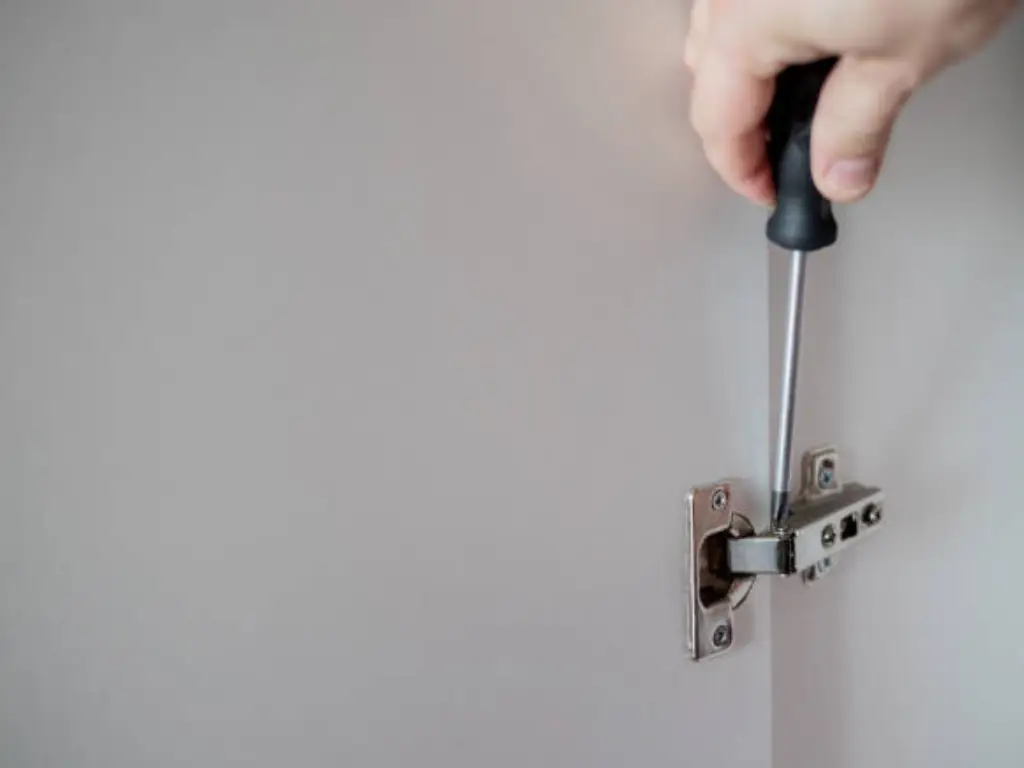
To maintain the operation of your cabinet doors after they are properly aligned, you may need to implement a few best practices.
- Routine Check-Ups: It’s important to remember that the screws on the hinges tighten and loosen from daily cabinet use. It’s best to periodically check and ensure all screws on the cabinet hinges are relatively tight.
- Do Not Exceed Weight Limits: Overloading weight on hinges can result in wear and tear over time, so be careful not to put strain on your cabinets that could lead to sagging shelves.
- Hygiene And Maintenance: Clean the hinges from time to time to ensure the proper flow of motion. Dust can easily restrict movement if not taken care of. Use a dry cloth for gentler cleaning or use a cloth, then dry it afterwards for stronger build up.
- Lubricate if Necessary: Hearing squeaks or seeing stiff movement indicates it’s time to lubricate the joint with WD-40, or any silicone spray. Move the hinge back and forth after applying it to allow nucleus distributes evenly.
- Identify Problems As They Occur: Thes signs when not tended to can lead to bigger problems; excessive stiffness and misplaced alignment which must be dealt with at the earliest to avoid further problems.
Conclusion
The adjustment of cabinet doors appears simple yet it produces major changes to the aesthetic quality of your room environment. The combination of hinge knowledge with proper tools and step-by-step guidance from this article will help you complete this household maintenance task with confidence. The key to achieving perfect alignment lies in using patience together with finesse. Selecting high-quality hinges from Maxave as a trusted manufacturer ensures both long-term performance and reduces the need for future adjustments. Move forward with this information to restore harmony to your cabinet doors while enjoying the peace of mind that comes from maintaining an attractive home.


 English
  Spanish
  Russian
  French
  German
  Italian
  Polish
  Dutch
Dutch  Greek
Greek  Turkish
  Romanian
  Hungarian
  Portuguese
  Arabic
  Japanese
  Korean
  Indonesian